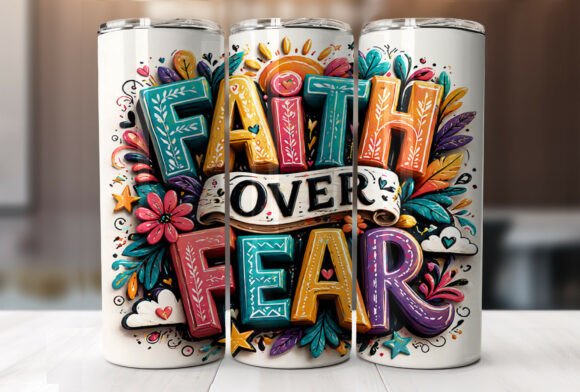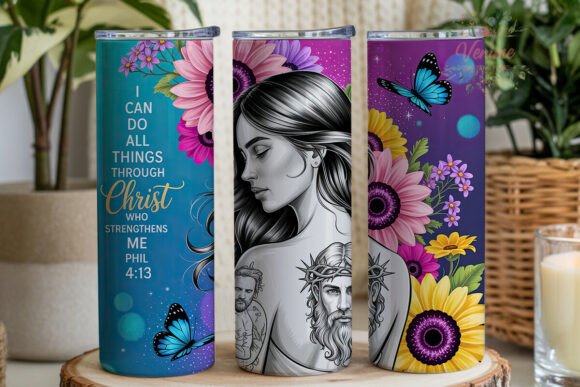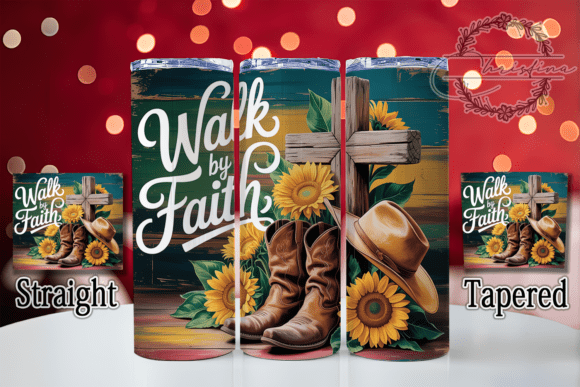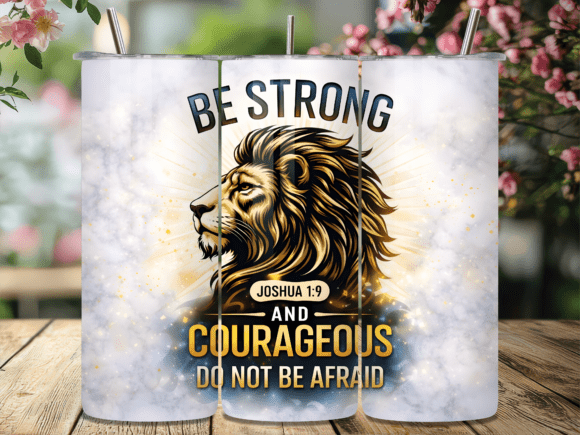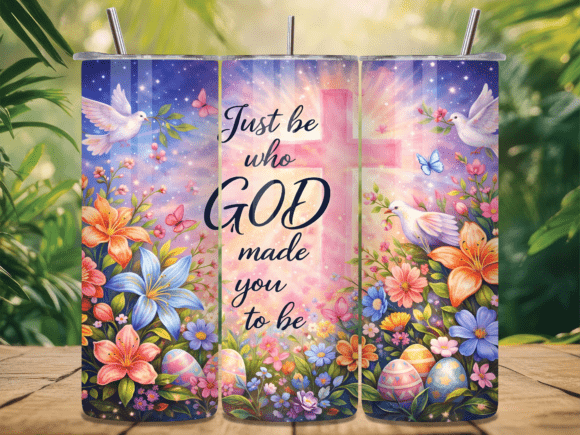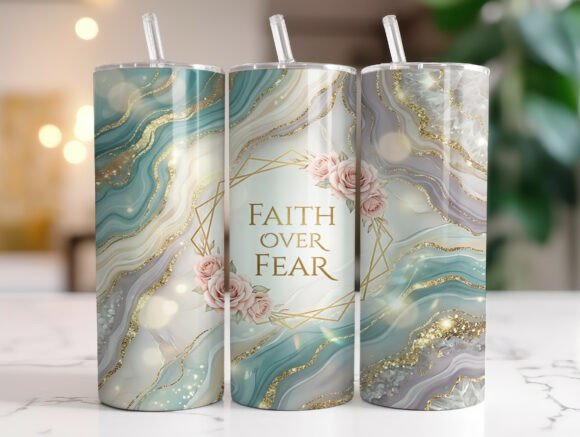
Faith over Fear Christian Faith Tumbler
First Impressions: A Quiet, Confident Statement
When I opened the Faith over Fear Christian Faith Tumbler embroidery file, what struck me wasn’t flashiness—it was clarity. Clean lines, balanced negative space, and a gentle rhythm in the lettering suggest thoughtful composition, not rushed digitizing. The phrase “Faith over Fear” sits center-stage, with subtle script flourishes on the “F” letters—just enough personality to feel handmade, not so much that it compromises legibility at small scales. It reads as reverent but approachable, which matters deeply when you’re stitching for real people: a new mom choosing nursery decor, a small shop owner curating faith-based gifts, or an Etsy seller building a cohesive collection of embroidered tea towels and tote bags.
Where This Design Lives Best
I tested Faith over Fear Christian Faith Tumbler across several real project types—and it shined brightest where intention meets simplicity. On a heavyweight cotton tote bag? Perfect. The moderate stitch density holds up without stiffness, and the text remains crisp even after repeated washing. On a soft unisex sweatshirt? Yes—especially over the left chest or centered on the back. The design’s width fits comfortably within standard 4×4 hoops, and its vertical proportion avoids awkward cropping on curved hems or sleeves.
It also works beautifully as an embroidered patch (heat-applied or sewn-on) for aprons, backpacks, or baby blankets. I stitched it onto a linen-cotton blend pillow cover for a friend’s baby shower—no hooping drama, no thread breaks, and the satin-stitched outlines gave just enough sheen without looking synthetic. For holiday embroidery, think: kitchen towels gifted at Christmas, or a small hoop-embroidered version on a child’s stocking. It carries warmth without cliché.
Where to Pause—and Plan Ahead
This isn’t a one-size-fits-all file. On thin or stretchy fabrics—like lightweight jersey tees or baby onesies—I recommend testing first with tear-away stabilizer and reduced top tension. The letterforms are tight enough that dense fill areas (especially in the lowercase “a” and “e”) can pucker if the fabric shifts mid-stitch. On dark fabric, contrast becomes critical: light thread (ecru, soft white, or pale gold) reads well, but avoid off-white on charcoal—heavy underlay can mute the effect.
Caps and curved surfaces demand extra attention. While the design fits most 3.5×3.5” cap hoops, the bottom curve of the “r” and “d” may compress slightly unless your digitizer built in slight optical scaling (which this version doesn’t appear to do). I’d avoid placing it low on a beanie or near the bill seam unless you’ve verified fit on your specific cap blank.
Also note: the script elements aren’t true applique—they’re satin-stitched outlines with fine interior detail. That means they won’t hold up as well on ultra-textured fabrics like bouclé or heavy terry cloth without additional topping stabilizer. And while the design is clean, it’s not minimalist: tiny serifs and connecting strokes mean sub-3” sizing risks lost definition. Stick to 3.25” wide minimum for clear reading.
What It Adds to Your Finished Product
- Visual appeal: It elevates a plain item into something intentional—not just branded, but meaningfully curated.
- Stitching clarity: No overlapping layers or nested fills, so thread changes are minimal and trimming is straightforward.
- Product value: Customers recognize quality pacing—consistent stitch length, smooth curves, no jagged corners—so they’ll pay more for a sweatshirt featuring this than a generic font-based alternative.
- Customer trust: Because it feels human-made rather than mass-produced, buyers associate it with care—critical for faith-based or personalized gift markets.
- Brand consistency: If you’re building a line of Christian-themed embroidery assets (think matching pillow + towel + tote sets), this design anchors the collection with quiet cohesion.
Practical Notes Every Embroidery Designer Should Check
Before adding Faith over Fear Christian Faith Tumbler to your next client order or Etsy listing, do these five things:
- Test the design on scrap fabric matching your final product—same weight, same stretch, same color.
- Review thread color contrast in both natural and artificial light; some ecru threads gray out on oatmeal linen.
- Check stitch density in the tightest areas (the inner loops of “o” and “a”)—if it’s over 12,000 stitches, consider simplifying for delicate fabrics.
- Confirm your hoop size matches the design’s bounding box—don’t assume it’s 4×4 unless verified.
- Inspect small details at 200% zoom in your embroidery software: are those script terminals cleanly tapered? Do running-stitch accents align smoothly?
Also—run a black-and-white mockup. Faith-based designs often land on neutral palettes (cream, slate, olive), and grayscale reveals how well contrast holds up when color isn’t doing the work. Finally, double-check licensing: if you’re selling finished embroidered items commercially—or reselling the digital embroidery file itself—you need explicit permission. This isn’t stated in the product description, so verify before scaling.
A Design That Serves the Maker, Not Just the Message
What makes Faith over Fear Christian Faith Tumbler stand out isn’t just its theme—it’s how respectfully it treats the craft. It doesn’t overload your machine, overwhelm your stabilizer, or ask too much from your fabric. It respects the time of the small shop owner rushing to fulfill holiday orders. It respects the hobbyist stitching late at night for a friend’s baby gift. And it respects the customer who chooses handmade because they want something that feels seen—not sold.
Used well, it becomes part of a larger story: the embroidered apron behind a church bake sale table, the pillow on a hospital bed, the tote carried into a counseling session. That’s the quiet power of a well-built machine embroidery design—it doesn’t shout. It settles in. And then, quietly, it stays.